Volume | Japan Policy Forum
Home > Volume

Archives Volume

No.
Vol.4, Culture  Mar. 9, 2026

Japanese Culture at World Expositions: Beyond 1970 and 2025

World Expositions and the Internationalization of Japanese Culture There are two dimensions to the “internationalization” of culture. One is the proactive dissemination of one’s own culture abroad while engaging in exchanges with other nations. In contrast, the second is what can be termed “internal internationalization”—a process where citizens’ direct exposure to foreign cultures within their own country fosters new forms of exchange and cultural creation with a global consciousness. International expositions, or World Expos, which are held based on international treaties, encompass both of these aspects. On one hand, they provide an opportunity for nations to exhibit their domestic industries and technologies while introducing their cultural and artistic works through events such as National Days. In the context of Japan, the Japan Pavilion and Japan Day at overseas expositions serve as vital platforms for communicating Japanese culture to the world. Conversely, in the host ... ... [Read more]
No.
Vol.4, Diplomacy  Mar. 9, 2026

Reading China’s Tactics Aiming to Change the Status Quo

What Was Prime Minister Takaichi’s Statement? On November 7, 2025, at the House of Representatives Budget Committee, regarding Japan’s right of collective self-defense, Prime Minister Takaichi Sanae was asked by Okada Katsuya, a member of the Constitutional Democratic Party of Japan (CDPJ), “under what circumstances a survival-threatening situation would occur.” In response, she stated that such a determination should be made “based on the individual and specific circumstances of the actual event, by comprehensively judging all available information.” Furthermore, regarding the content of a survival-threatening situation, she answered, “It is as stated in Article 2, Item (iv) of the Armed Attack Situation Response Act.” That Article 2, Item (iv) stipulates: “a situation where an armed attack against a foreign country that has a close relationship with Japan occurs and as a result, Japan’s survival is threatened and there is a clear danger that the people’s right to life, liberty and the pursuit of happiness could be fundamentally overturned.” In response, while confirming whether she was saying ... ... [Read more]

No.
Vol.4, Society  Mar. 9, 2026

Why Are Debates Surrounding Family and Gender So Contentious? The “Principle of Deliberation” to Which We Must Return

What Is Conservatism in the First Place? The understandings of the concept of conservatism vary greatly from person to person. Historically, however, conservatism has represented a position that calmly asserts the impracticality of those forces that seek to sweep away an enduring society to construct a new one from a clean slate. Consequently, Edmund Burke (1729–1797), who expressed reservations on the voices praising the French Revolution, and Friedrich Hayek (1899–1992), who denied the feasibility of a socialist planned economy, are regarded as quintessential conservative thinkers. Both the French Revolution and the socialist planned economy were movements that attempted to fundamentally reconstruct society based on specific ideologies. Conservatism is what calmly pointed out the impracticality of such reforms. From a conservative perspective, while the ideologies of reformists—such as social contract theory, the concept of human rights, and historical materialism—certainly possess a degree of logic, they ... ... [Read more]

No.
Vol.2, Diplomacy  Feb. 23, 2026

Seven Major Changes in the Security Environment

An era where “defense diplomacy” is indispensable Jimbo Ken: Thank you for this opportunity to speak with you today. I understand that this is your first media appearance since retiring as Chief of Staff of the Joint Staff (hereinafter CSJS), and I am extremely honored. You served as the CSJS for two years and four months. In December 2022, just before your appointment, the National Security Strategy (NSS), also known as the three security documents (the National Security Strategy, the National Defense Strategy, and the Defense Buildup Program)[1], recognized that “Japan is currently facing the most severe and complex security environment since the end of World War II.” Your tenure seems to have been a major turning point in world history. How did you view those changes? Yoshida Yoshihide: Before we get to the main topic, let me start with a little warm-up. In ... ... [Read more]

No.
Vol.2, Science  Feb. 16, 2026

Sakaguchi and Kitagawa win Nobel Prize: Japan celebrates dual achievement in same year as two researchers who persevered through adversity call for support for basic research

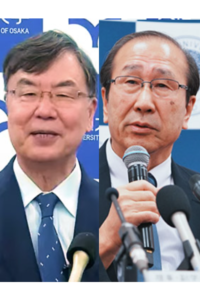
Distinguished Honorary Professor Sakaguchi Shimon of the University of Osaka was awarded the 2025 Nobel Prize in Physiology or Medicine, and Distinguished Professor Kitagawa Susumu of Kyoto University received the Nobel Prize in Chemistry. They were each selected together with their co-researchers. Sakaguchi was recognized for his “discovery of mechanisms that suppress immune responses,” which has led to the prevention and treatment of diseases involving immunity, such as autoimmune diseases and cancer. Kitagawa was honored for his “development of metal-organic frameworks (MOFs)” that allow gases to be freely stored and released, with applications expected across a wide range of fields including environmental and energy challenges and new materials development. This is the first time in seven years that a Japanese researcher has received the Prize in Physiology or Medicine, with Sakaguchi as the sixth recipient, and the first time in six years for the ... ... [Read more]

No.
Vol.2, Society  Feb. 15, 2026

Expos as Sites of Experimentation: Considering the Architecture of Expo 2025

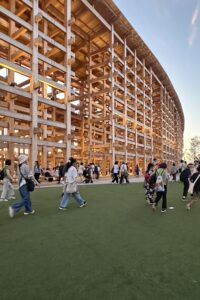
“Surprisingly impressive” this Expo As of this writing, four months have passed since the opening of Expo 2025 Osaka, Kansai, Japan (hereinafter Expo 2025) on April 13, 2025. Prior to the event, various criticisms and questions had been raised, including concerns about the appropriateness of the project costs and the plans for utilizing the site, which involve developing an integrated resort (IR), including a casino. Other concerns included methane gas emissions and whether there was any justification for hosting an Expo in Japan at this time. Even after the event began, there was no shortage of topics of criticism, such as the experimental toilets being difficult to use and the appearance of swarms of chironomids. Unpaid pavilion construction costs were also a cause for concern. However, public perception has steadily improved, and the number of visitors seems to be growing steadily as well.[1] Its ... ... [Read more]

No.
Vol.2, Diplomacy  Feb. 13, 2026

Xi Jinping’s Regime: Political Dynamics of Personal Dictatorship

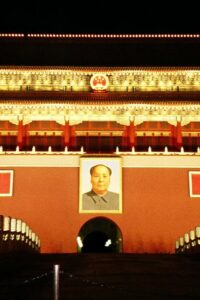
  The Xi Jinping administration is now on a stronger footing than ever, based on Mao Zedong’s governing philosophy (Maoism). Is Xi’s rule unshakable? Where does Xi’s power come from? In this dialogue, two China experts explore Xi Jinping’s domestic governance, global strategy, and succession. [Editor’s note: This dialogue took place on October 2, 2025.]   Kawashima Shin: The Xi Jinping administration is currently midway through its third term. To assess its future, let’s first consider China’s political schedule. Suzuki Takashi: The end of his third term in 2027 will mark a turning point, but barring any unforeseen events, I believe the Xi Jinping administration will see a fourth term (until 2032). In the long term, China aims to become a “great modern socialist country” by 2049, the 100th anniversary of the People’s Republic of China’s founding. The country also aims to rival or ... ... [Read more]

No.
Vol.2, Diplomacy  Feb. 12, 2026

“A World with America” and “A World without America”

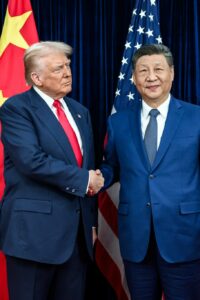
Editor’s note: This article was written in October 2025 and originally appeared in the December issue of Chuokoron, published on November 10 of the same year. “A World with America” ​​and “A World without America” International politics is in flux. Such clear, tectonic shifts are rare. In the summer of 2025, dozens of world leaders attended international conferences hosted by the Chinese government in Tianjin and Beijing. Their presence in photographs seemed to endorse China’s leadership. Meanwhile, US President Donald Trump negotiated a ceasefire between Israel and Hamas in the Gaza Strip. The White House and Trump’s supporters continue to promote an image of Trump as a global peacemaker. As of mid-October 2025, the United States and China were continuing their tariff negotiations and threatening to impose new export restrictions and tariffs. However, it is believed that there is a high possibility that a ... ... [Read more]

No.
Vol.2, Diplomacy  Feb. 8, 2026

Regarding the “Limited Exercise of the Right of Collective Self-defense” Based on the Determination of “Survival-threatening Situations”

What constitutes a “survival-threatening situation”? The government’s view is that Prime Minister Takaichi’s November 2025 response, in which she stated that a naval blockade around Taiwan could constitute such a situation, does not change the government’s previous position. However, many issues remain unresolved, and the legal basis is not necessarily clear. Tsuruta Jun examines the situation envisioned in this response, the legal structure of such existential threat situations, and the right of collective self-defense. Prime Minister Takaichi’s remarks to the question of survival-threatening situations During the Lower House Budget Committee session on 7 November 2025, Prime Minister Takaichi Sanae responded to a question from an opposition lawmaker who asked whether a blockade of the Bashi Channel between Taiwan and the Philippines would constitute a “survival-threatening situation.” She stated the following: “If an armed attack [by China] were to occur against Taiwan, ‘if a naval ... ... [Read more]

No.86
Vol. 1, Culture  Feb. 8, 2026

Japanese Pop Culture and Cultural Diplomacy: Overseas Expansion, Reception, and the Role of Fan Communities

The popularity of Japanese pop culture continues to grow. Leveraging inbound tourism and imported culture is also a key aspect of cultural diplomacy. Pop culture as a strategic pillar of cultural diplomacy. The weak yen is driving global interest in events and sales within Japan. The “mutual circulation” of culture aligns with the essence of cultural diplomacy. Pop culture has become an important element in modern soft power strategies. Japanese anime, manga, games, and related music are enjoyed worldwide, and Japan is already one of the leading countries in promoting pop culture. Anime and game conventions are held in various countries and regions around the world, attracting many fans of Japanese works. This movement of Japanese pop culture is primarily driven by creators and private companies who communicate its fun and excitement through their work, both in Japan and around the world. This has ... ... [Read more]