


China’s Expanding Presence in Central Asia: Its Global Strategy and Public Responses
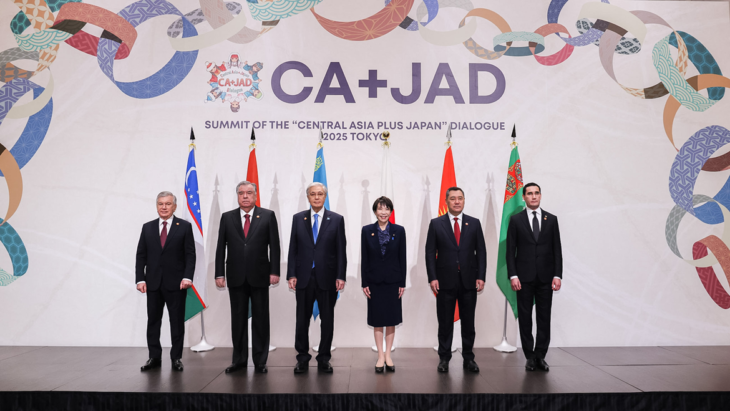
On December 20, 2025, the Summit of the “Central Asia plus Japan” Dialogue (CA+JAD) was held in Tokyo, for the first time at the leader’s level. Through the “Central Asia plus Japan” Dialogue, Japan has demonstrated its uniqueness in promoting regional integration in Central Asia and defended the interests of small and medium-sized countries in the international community.
Photo: Cabinet Public Affairs Office
China is deepening its relations with Central Asian countries, primarily in the economic sphere. China appears to be pursuing an inclusive strategy toward the region that differs from its approach to East and Southeast Asia.
- Utilizing both multilateral and bilateral frameworks, such as “Central Asia plus China”
- Competition with Chinese companies and land-related issues are negatively affecting public sentiment toward China
- Providing human resource development and meticulous assistance; Japan should further enhance its distinctiveness
Since the start of Russia’s full-scale invasion of Ukraine in February 2022, Central Asian countries have pushed for the diversification of their diplomacy even more vigorously than before. Consequently, attention has been focused on which extra-regional powers would exert their influence within the international relations surrounding Central Asia. Now, more than three and a half years later (as of the time of writing), it appears evident that China is the country that has most successfully strengthened its ties with the region. I would like to examine in what specific aspects the relationship between China and Central Asia is deepening, what this will bring about, and the limitations of this partnership.
Two “China-Central Asia Summits”
Among the events involving China and the Central Asian countries, the one that garnered the most international attention was the “China-Central Asia Summit” (the C5+1 mechanism with China) held in Xi’an in May 2023. With its flamboyant staging reminiscent of the Tang Dynasty and a joint declaration filled with terms clearly to China’s liking—such as support for each other’s “core interests,” praise for the “Chinese model of development,” and opposition to “color revolutions”—the summit gave an impression of being somewhat superficial, as it is difficult to believe that the Central Asian countries have truly internalized such rhetoric. Nevertheless, the leaders of the Central Asian nations also put forward various proposals during the summit, expressing their expectations for strengthening relations with China.
What was significant was that China clearly demonstrated its resolve through this summit to conduct multilateral diplomacy with the five Central Asian countries at the leadership level. The “5+1” format, in which an extra-regional power brings together representatives from all five Central Asian nations for dialogue, has been successively emulated by other countries since Japan initiated the “Central Asia plus Japan” Dialogue in 2004. China, which had long prioritized individual bilateral relations with each country, was a latecomer to this multilateral format, only establishing the “Central Asia plus China” framework in 2020. However, in the three years that followed, China managed to organize a summit and, in 2024, established a permanent secretariat for “Central Asia plus China” in Xi’an. This differs from other countries’ “5+1” formats, which remain informal platforms for dialogue and consultation. By establishing a secretariat, China has institutionalized the framework with a permanent organizational foundation. Central Asian countries tend to value such clear and sustainable institutional frameworks, making China’s approach more attractive to them.
China’s distinctiveness also lies in its decision to hold these summits with Central Asian nations as a regular biennial event. The second summit was held June 2025 in Astana, the capital of Kazakhstan, where the “Treaty on Eternal Good-Neighborliness, Friendship and Cooperation” was signed among the six nations (5+1). It goes without saying that, following the first summit, numerous agreements on economic relations were concluded. Until now, the Shanghai Cooperation Organization (SCO) has garnered attention as a multilateral framework encompassing China and Central Asia. However, Turkmenistan—a permanently neutral country—is not a member, and consensus-building is difficult among members with such diverse interests as Russia and India. It can be said that the “Central Asia plus China” framework is more efficient for both sides than such a complex organization as the SCO.
Rapid expansion of economic relations
Trade between the Central Asian countries and China has grown steadily since the 2000s, though it experienced a downturn during the COVID-19 pandemic in 2020. Since the pandemic, however, it has shown a growth that more than compensates for that decline. In addition to Turkmenistan, which has long exported vast quantities of natural gas to China, China surpassed Russia to become the top trading partner for Kazakhstan, Uzbekistan, and Kyrgyzstan by 2023. One factor in this increase is thought to be that Central Asian countries became routes for circumvention trade between China and Russia. Although the growth of this trade stagnated in 2024, it rose again in 2025, making China the number one trading partner for Tajikistan as well. It should be noted that, with the exception of Turkmenistan, the Central Asian countries run a trade deficit with China, with Tajikistan, Uzbekistan, and Kyrgyzstan, in particular, seeing a significant excess of imports.
Investment from China is expanding into an extremely wide range of fields in addition to oil and gas development. In Kazakhstan, a consortium led by Russia’s Rosatom has begun construction of the first nuclear power plant; however, it has been decided that the second and third nuclear plants will be built by the China National Nuclear Corporation (CNNC). This makes it clear that China’s influence is increasing even in the field of nuclear energy, where Russia possesses extensive experience. Cooperation in the IT industry is also progressing. It is said that the number of joint ventures with China across various fields exceeds 10,000 throughout Central Asia. Furthermore, China is increasingly undertaking the training of human resources, such as engineers.
The development of transport infrastructure is also moving forward, and the commencement of construction on the railway connecting China, Kyrgyzstan, and Uzbekistan in 2024 is major news. While this project had been envisioned for many years, it is said that Russia expressed dissatisfaction with the construction plan of a railway that would form a transport route connecting East and West Eurasia while bypassing Russia, and there were technical issues such as traversing high-altitude areas and differences in track gauge. However, the momentum of China’s “Belt and Road” Initiative (BRI), combined with the determination of Kyrgyzstan and Uzbekistan to become Eurasian transport hubs, has overcome such difficulties.
Development of Cooperation in Military and Security Spheres
It was once considered that Russia held overwhelming influence in Central Asia in terms of military and security, but in recent years, China’s power has also been increasing. The Chinese military conducts joint exercises with the militaries of Central Asian countries, primarily using the SCO framework, but occasionally on a bilateral basis as well. Furthermore, cooperation in areas such as public safety and information security is flourishing, with China’s People’s Armed Police (PAP) training the police forces of Central Asian countries. With the primary objective of ensuring the safety of Chinese enterprises, Chinese private security companies have also entered Central Asia.
A particularly prominent example of such cooperation is Tajikistan. Sharing interests with China in defending the border with Afghanistan, Tajikistan has received Chinese assistance in the supply of weapons and the construction of facilities for its military and security agencies. Although not acknowledged by either government, it is said that around 2016, a Chinese military base (likely a facility of the Ministry of Public Security (MPS) rather than the Chinese military) was constructed near the Afghan border (Wakhan Corridor). In 2021, it was reported that the Tajik side also proposed the construction of a Tajik military base near the border, to be funded by China.
Under the slogan of “Safe City,” Central Asian countries have been moving forward with the installation of street surveillance cameras with the cooperation of various foreign nations; in particular, Tajikistan receives comprehensive support from China regarding both street and internet surveillance. This indicates that Chinese cooperation is crucial for Tajikistan’s domestic control and the suppression of opposition forces.
Such cooperative relations are considered part of the “Global Security Initiative” and “Global Initiative on Data Security”—among the various global initiatives that China has been introducing one after another—and have gained the support of Central Asian governments. Moving forward, there is a high possibility that Central Asia, and Tajikistan in particular, will be positioned as a successful example of China’s expanding global influence.
Countering Anti-Chinese Sentiment by Strengthening Soft Power
While the regimes of Central Asian countries cooperate closely with China, the general public does not feel much affinity toward China, and anti-Chinese sentiment occasionally manifests. China has engaged in public and cultural diplomacy, but it has been said to lack soft power, as these efforts have not been very effective. However, in this area as well, efforts for improvement have been progressing in recent years.
Particularly noticeable is the media strategy, with media forums held jointly with Central Asian countries and frequent training sessions in China for Central Asian journalists. The Chinese side also provides content to Central Asian media, presumably expecting coverage favorable to China. Cultural exchanges in fields such as film and music are also intensifying. The Kazakh singer Dimash Kudaibergen, who is famous in China, has become a symbol of exchange between the two countries.
As a global international cooperation strategy, China has come to emphasize not only flamboyant projects like large-scale infrastructure construction but also “small yet smart” livelihood projects, and the same is true in Central Asia. For instance, in terms of human resource development, in addition to the long-standing Confucius Institutes for Chinese language education, vocational education programs called “Luban Workshops” have been introduced or are planned for introduction in each Central Asian country. Furthermore, the China International Development Cooperation Agency (CIDCA) has embarked on the type of assistance previously handled by the United States, such as supporting school meals in Kyrgyzstan in cooperation with the World Food Programme. It could be said that China has begun the kind of grassroots-level cooperation that Japan has excelled in. However, since civil society organizations such as NGOs and independent media are not targets of its support, the view held by some—that China is replacing the United States Agency for International Development (USAID), which was dismantled under the Trump administration—is likely not very accurate.
Fluctuations in Pro- and Anti-Chinese Sentiments Depending on the Nature of Interaction
Have these efforts to strengthen political, economic, and military ties with China, along with initiatives to promote Chinese soft power, improved the sentiments of the people in Central Asian countries toward China?
In the 2010s, anti-Chinese sentiment frequently surfaced in Kazakhstan and Kyrgyzstan. These countries share borders with China, leading to potential territorial issues, and their economic relations had deepened from an early stage. Furthermore, because freedom of speech and social activities were relatively established, anti-Chinese sentiments tended to be expressed more openly. In Kazakhstan in 2016, nationwide protest rallies broke out, triggered by false rumors that “land was being sold to Chinese people.” The intensifying suppression of Muslims in the Xinjiang Uyghur Autonomous Region, including ethnic Kazakhs living there (Chinese citizens of Kazakh descent), also provoked antipathy. In Kyrgyzstan, conflicts between advancing Chinese companies or Chinese workers and local residents were frequently observed. Subsequently, partly due to the COVID-19 pandemic, prominent incidents decreased. However, according to public opinion surveys by the “Central Asia Barometer (CAB),” while the majority of respondents in both countries and Uzbekistan held a favorable view of China in 2017, a clear downward trend was observed leading up to 2021.
However, according to the same survey conducted from 2022 to 2023, a majority of people in Kazakhstan and Kyrgyzstan once again answered that they hold a favorable view of China. In questions regarding specific issues, while the percentage of people concerned about debt to China or land purchases by Chinese people remained high, and opposition to the arrival of Chinese workers remained persistent, the approval rating for China’s energy and infrastructure projects has risen. It could be said that the fruits of economic cooperation have come to be recognized by the public. Especially in Kyrgyzstan, the Sadyr Japarov administration, which has gained public support through proactive economic development policies, appears to have influenced public opinion with its eagerness to introduce capital and technology from China. Additionally, in Kazakhstan—which shares a border of approximately 7,500 kilometers with its neighbor Russia—following the start of the invasion of Ukraine in 2022, a sense of vigilance toward Russia escalated rapidly. Russia had already occasionally demonstrated a disregard to Kazakhstan’s sovereignty. This factor is seen as relatively elevating the image of China.
On the other hand, in Uzbekistan—which does not share a border with China and where the “China threat” theory had previously been weak—a majority of public opinion has conversely become unfavorable toward China. Under the reform and opening-up policies of the Shavkat Mirziyoyev administration, economic relations with China, particularly investment, are expanding rapidly; however, the public appears bewildered by this new state of affairs for Uzbekistan. Since the beginning of 2025, disinformation has spread on social media claiming that Chinese people are buying up land or that China is demanding an anti-religious struggle in exchange for loans. There have also been posts expressing discomfort over the increasing number of shops displaying signs in Chinese. Although it is legally impossible for foreigners to buy land in Uzbekistan, there were reportedly actual cases where local authorities forced residents to provide land for use by Chinese companies. In Tajikistan and Turkmenistan, control is strict, and anti-Chinese public opinion or protest actions have not surfaced; however, at least among the intellectual class in Tajikistan, critical opinions of China are not uncommon.
The increase in anti-Chinese remarks in Uzbekistan is also said to be influenced by intensifying competition between Chinese-affiliated companies and local firms. Similar circumstances likely exist to a greater or lesser extent in other countries as well. The suppression of Muslims in Xinjiang continues to be a factor contributing to a negative image of China. While efforts to strengthen China’s soft power and personnel exchanges are highly regarded among those directly involved in Central Asia, particularly in Kazakhstan, the extent to which they influence the general public remains unclear at present. Whether favorable or unfavorable views will become the mainstream of future sentiment toward China in Central Asia remains unpredictable.
Japan’s Role in Advocating for the Interests of Central Asian Countries
To varying degrees, Central Asian countries uphold omnidirectional foreign policies, and the strengthening of ties with China does not weaken relations with other countries in a zero-sum manner. Russia, which maintains deep historical, cultural, and human ties with the region, may see its relative status decline, but its exit from Central Asia is inconceivable. Western powers, particularly the EU and the United Kingdom, have been working to strengthen their relations with Central Asia since the start of the invasion of Ukraine. In addition to Turkey, which holds an advantage through cultural affinity, the wealthy Arab states of the Persian Gulf are also showing momentum in their expansion into Central Asia. However, in terms of involvement being both constant and powerful, China likely stands at the forefront. For Japan, which has long been pointed out—as a fellow East Asian nation—for being less proactive in its engagement with Central Asia compared to China or South Korea, the situation is such that it could lose its areas of advantage as China embarks not only on economic relations reliant on sheer volume but also on tailored assistance.
Furthermore, the strengthening of China’s presence in Central Asia does not immediately disrupt the international order. While China’s actions in East and Southeast Asia tend to be aggressive in relation to power games and military strategy, in Central Asia, China basically aims for the maintenance of the international order. Regarding the enhancement of connectivity within and beyond the Central Asian region, although the objectives of China, the EU, and Japan differ, there is no conflict of interest in the business aspects of transport infrastructure development. However, if China uses its successful experiences in Central Asia as a springboard to further strengthen its expansion into various parts of the world, it could potentially upset the balance of the international order.
China’s pragmatism-driven actions are clear and easy to understand from a Central Asian perspective; conversely, however, it can be said that China is not acting with the specific intent of benefiting the Central Asian countries. Unlike the “Central Asia plus Japan” Dialogue, the “Central Asia plus China” framework is not intended to serve as a catalyst for regional integration among the Central Asian countries themselves. For Japan, there remains room to demonstrate a distinctiveness different from China’s by promoting regional integration and advocating for the interests of small and medium-sized states within the international community.
Translated from “Chuo Ajia Shokoku de Kakudaisuru Chugoku no Sonzaikan — Sono Gurobaru Senyryaku to Kakkoku Yoron no Hanno (China’s Expanding Presence in Central Asia: Its Global Strategy and Public Responses),” Gaiko (Diplomacy), Vol. 94 Nov. / Dec. 2025, pp. 54–59. (Courtesy of Jiji Press) [March 2026]

UYAMA Tomohiko
Professor, Slavic-Eurasian Research Center, Hokkaido University
After serving as a Special Research Fellow at the Embassy of Japan in Kazakhstan, he withdrew from the doctoral program at the Graduate School of Arts and Sciences, the University of Tokyo, and obtained an associate professorship at Hokkaido University in 1996. He specializes in the modern and contemporary history of Central Eurasia and international politics in the former Soviet region. His publications include Chuo Ajia no Rekishi to Genzai (The history and present of Central Asia), and he is the editor of works such as Asiatic Russia: Imperial Power in Regional and International Contexts, and Empire, Islam, and Politics in Central Eurasia.
Keywords
- Central Asia plus China
- China-Central Asia Summit
- 5+1
- trade
- military cooperation
- soft power
- anti-Chinese sentiment
Related posts:
 Will “Chinese-style” Development Permeate Hong Kong?
 Japan’s International Cooperation Seen from Palau: Rising Geopolitical Interests, Principles and Strategies under Scrutiny
 Afghanistan Earthquake: Relief Activities by Peace Japan Medical Services and Peshawar-kai
 Recent Cyber Situations and the Bill Introducing Active Cyber Defense
 Seven Major Changes in the Security Environment