Diplomacy | Japan Policy Forum
Home > Topics > Diplomacy

Archives Diplomacy

No.
Vol.3, Diplomacy  Mar. 9, 2026

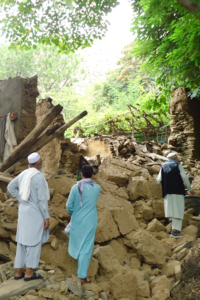
Afghanistan Earthquake: Relief Activities by Peace Japan Medical Services and Peshawar-kai

On August 31, 2025 a devastating earthquake struck eastern Afghanistan. Peace Japan Medical Services (PMS) and Peshawar-kai immediately launched emergency relief operations. In the mountainous regions, there were people beyond the reach of any aid. When necessary, support was provided directly to the people, bypassing local administrative channels. Our guiding principle of “sustaining life” has earned profound trust.   Around 11:50 PM local time on August 31, 2025, a magnitude 6.0 earthquake struck with its epicenter in Nurgal District, Kunar Province, eastern Afghanistan, causing catastrophic damage. The affected areas overlap with the irrigation project sites of Peace Japan Medical Services (PMS), which operates out of Jalalabad, Nangarhar Province. Afghanistan is located in the western part of the Himalayan, Karakoram, and Hindu Kush mountain ranges, which were formed by the collision of the Eurasian and Indian tectonic plates. This region is prone to earthquakes and ... ... [Read more]
No.
Vol.4, Diplomacy  Mar. 9, 2026

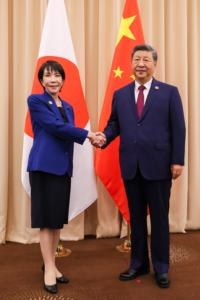
Reading China’s Tactics Aiming to Change the Status Quo

What Was Prime Minister Takaichi’s Statement? On November 7, 2025, at the House of Representatives Budget Committee, regarding Japan’s right of collective self-defense, Prime Minister Takaichi Sanae was asked by Okada Katsuya, a member of the Constitutional Democratic Party of Japan (CDPJ), “under what circumstances a survival-threatening situation would occur.” In response, she stated that such a determination should be made “based on the individual and specific circumstances of the actual event, by comprehensively judging all available information.” Furthermore, regarding the content of a survival-threatening situation, she answered, “It is as stated in Article 2, Item (iv) of the Armed Attack Situation Response Act.” That Article 2, Item (iv) stipulates: “a situation where an armed attack against a foreign country that has a close relationship with Japan occurs and as a result, Japan’s survival is threatened and there is a clear danger that the people’s right to life, liberty and the pursuit of happiness could be fundamentally overturned.” In response, while confirming whether she was saying ... ... [Read more]

No.
Vol.3, Diplomacy  Mar. 8, 2026

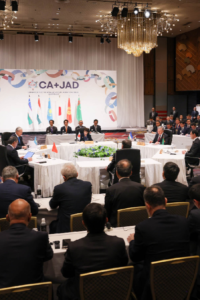
China’s Expanding Presence in Central Asia: Its Global Strategy and Public Responses

China is deepening its relations with Central Asian countries, primarily in the economic sphere. China appears to be pursuing an inclusive strategy toward the region that differs from its approach to East and Southeast Asia. Utilizing both multilateral and bilateral frameworks, such as “Central Asia plus China” Competition with Chinese companies and land-related issues are negatively affecting public sentiment toward China Providing human resource development and meticulous assistance; Japan should further enhance its distinctiveness   Since the start of Russia’s full-scale invasion of Ukraine in February 2022, Central Asian countries have pushed for the diversification of their diplomacy even more vigorously than before. Consequently, attention has been focused on which extra-regional powers would exert their influence within the international relations surrounding Central Asia. Now, more than three and a half years later (as of the time of writing), it appears evident that China is ... ... [Read more]

No.
Vol.3, Diplomacy  Mar. 4, 2026

Japan’s International Cooperation Seen from Palau: Rising Geopolitical Interests, Principles and Strategies under Scrutiny

The Pacific Island region is seeing rising geopolitical interest from around the world. Located in the western part of this region, Palau has deep ties with Japan in terms of both historical and personal exchanges. Through JICA’s support, we examine the challenges unique to island nations and the ideal form of aid that contributes to realizing “Human Potential.” Infrastructure investment to stimulate economic growth in island regions Resolving multiple vulnerabilities through innovative aid Growing importance of fostering regionalism amid rising geopolitical risks Mine Yoichi: In mid-September 2025, I traveled to Palau with Nakanishi-san to inspect the sites of Japan’s international cooperation. Palau is located at the western edge of Micronesia, east of Mindanao Island in the Philippines. Nakanishi Hiroshi: At the time of our visit, it was a day-long journey via Guam, but with the establishment of a new direct flight from Narita on October 29, ... ... [Read more]

No.
Vol.3, Diplomacy  Feb. 26, 2026

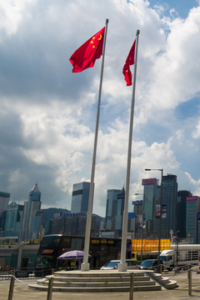
Will “Chinese-style” Development Permeate Hong Kong?

Hong Kong’s politics are under the control of the Chinese Communist Party, while its economy remains a capitalist system. In Hong Kong, characterized by a so-called “One City, Two Systems,” “Chinese-style” control is also intensifying within the economic sector. Plans are [underway] for executive-led initiatives to establish high-tech industries in the Northern Metropolis. Private enterprises are struggling, being asked to provide massive amounts of investment. There is also criticism of industrial policies that lack a perspective on the service industry, which is Hong Kong’s strength. In June 2020, the Chinese government enacted the “Hong Kong National Security Law (NSL)” to suppress the intense protests that broke out in Hong Kong in 2019. In the more than five years since then, political repression has raged through Hong Kong. In accordance with the NSL, courts have repeatedly issued rulings criminalizing freedom of expression, sending many commentators, ... ... [Read more]

No.
Vol.2, Diplomacy  Feb. 23, 2026

Seven Major Changes in the Security Environment

An era where “defense diplomacy” is indispensable Jimbo Ken: Thank you for this opportunity to speak with you today. I understand that this is your first media appearance since retiring as Chief of Staff of the Joint Staff (hereinafter CSJS), and I am extremely honored. You served as the CSJS for two years and four months. In December 2022, just before your appointment, the National Security Strategy (NSS), also known as the three security documents (the National Security Strategy, the National Defense Strategy, and the Defense Buildup Program)[1], recognized that “Japan is currently facing the most severe and complex security environment since the end of World War II.” Your tenure seems to have been a major turning point in world history. How did you view those changes? Yoshida Yoshihide: Before we get to the main topic, let me start with a little warm-up. In ... ... [Read more]

No.
Vol.2, Diplomacy  Feb. 13, 2026

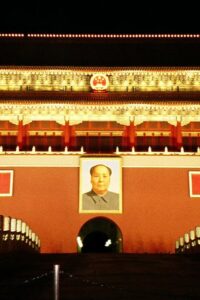
Xi Jinping’s Regime: Political Dynamics of Personal Dictatorship

  The Xi Jinping administration is now on a stronger footing than ever, based on Mao Zedong’s governing philosophy (Maoism). Is Xi’s rule unshakable? Where does Xi’s power come from? In this dialogue, two China experts explore Xi Jinping’s domestic governance, global strategy, and succession. [Editor’s note: This dialogue took place on October 2, 2025.]   Kawashima Shin: The Xi Jinping administration is currently midway through its third term. To assess its future, let’s first consider China’s political schedule. Suzuki Takashi: The end of his third term in 2027 will mark a turning point, but barring any unforeseen events, I believe the Xi Jinping administration will see a fourth term (until 2032). In the long term, China aims to become a “great modern socialist country” by 2049, the 100th anniversary of the People’s Republic of China’s founding. The country also aims to rival or ... ... [Read more]

No.
Vol.2, Diplomacy  Feb. 12, 2026

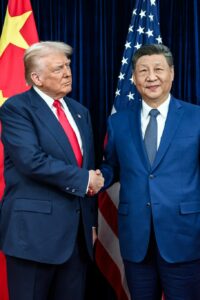
“A World with America” and “A World without America”

Editor’s note: This article was written in October 2025 and originally appeared in the December issue of Chuokoron, published on November 10 of the same year. “A World with America” ​​and “A World without America” International politics is in flux. Such clear, tectonic shifts are rare. In the summer of 2025, dozens of world leaders attended international conferences hosted by the Chinese government in Tianjin and Beijing. Their presence in photographs seemed to endorse China’s leadership. Meanwhile, US President Donald Trump negotiated a ceasefire between Israel and Hamas in the Gaza Strip. The White House and Trump’s supporters continue to promote an image of Trump as a global peacemaker. As of mid-October 2025, the United States and China were continuing their tariff negotiations and threatening to impose new export restrictions and tariffs. However, it is believed that there is a high possibility that a ... ... [Read more]

No.
Vol.2, Diplomacy  Feb. 8, 2026

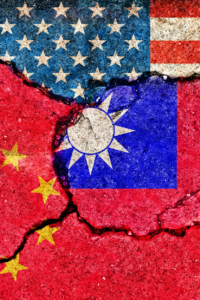
Regarding the “Limited Exercise of the Right of Collective Self-defense” Based on the Determination of “Survival-threatening Situations”

What constitutes a “survival-threatening situation”? The government’s view is that Prime Minister Takaichi’s November 2025 response, in which she stated that a naval blockade around Taiwan could constitute such a situation, does not change the government’s previous position. However, many issues remain unresolved, and the legal basis is not necessarily clear. Tsuruta Jun examines the situation envisioned in this response, the legal structure of such existential threat situations, and the right of collective self-defense. Prime Minister Takaichi’s remarks to the question of survival-threatening situations During the Lower House Budget Committee session on 7 November 2025, Prime Minister Takaichi Sanae responded to a question from an opposition lawmaker who asked whether a blockade of the Bashi Channel between Taiwan and the Philippines would constitute a “survival-threatening situation.” She stated the following: “If an armed attack [by China] were to occur against Taiwan, ‘if a naval ... ... [Read more]

No.
Vol. 1, Diplomacy  Jan. 27, 2026

Recent Cyber Situations and the Bill Introducing Active Cyber Defense

Recent cyberattacks in the context of geopolitics Since around 2022, state-sponsored cyberattacks have become increasingly prevalent. This is partly due to the rogue cyber nations[1] using cyberattacks to achieve their national objectives. Cyberattacks that do not involve large-scale destruction or loss of life do not constitute armed attacks. These attacks can disable an adversary’s critical infrastructure without inciting armed conflict. Furthermore, ransomware attacks on critical infrastructure or supply chains make it difficult to distinguish between attacks by criminal groups and those ordered by a state. This makes it possible to damage an enemy country while concealing state involvement. In this respect, cyberattacks have become a convenient tool for rogue cyber nations. Furthermore, information-theft cyberattacks, which take advantage of the technical characteristics of cyberattacks that make it difficult to identify attackers, are becoming more prevalent, stealing policy information, business secrets, and intellectual property from target ... ... [Read more]